How Do Egg Timers Work? The Quick Answer
If you have ever boiled eggs with a small timer in the pot and asked, "How do egg timers work?" you are not alone. The phrase "egg timer" actually covers two different devices. A color-changing egg timer is placed in water with the eggs and reacts to temperature. A mechanical kitchen timer is wound by hand and counts down a fixed interval with springs and gears. Both can help you cook eggs, but they work in completely different ways. For anyone buying timers in volume for kitchen appliances, the mechanical version is usually the more practical choice because it can be built into an oven, an air fryer, or an egg cooker as a functional component.
The question "how do egg timers work" therefore has two accurate answers. The first is thermal: the indicator changes color at the temperature where egg proteins set. The second is mechanical: a coiled spring releases energy through a gear train, and a calibrated rate of rotation returns the control knob to zero after a set number of minutes.
Key takeaway: An egg timer is either a thermal indicator or a mechanical countdown device. In cooking appliances, the practical option is usually the spring-driven mechanical timer.
Mechanical Egg Timers: Spring, Gears, and Escapement
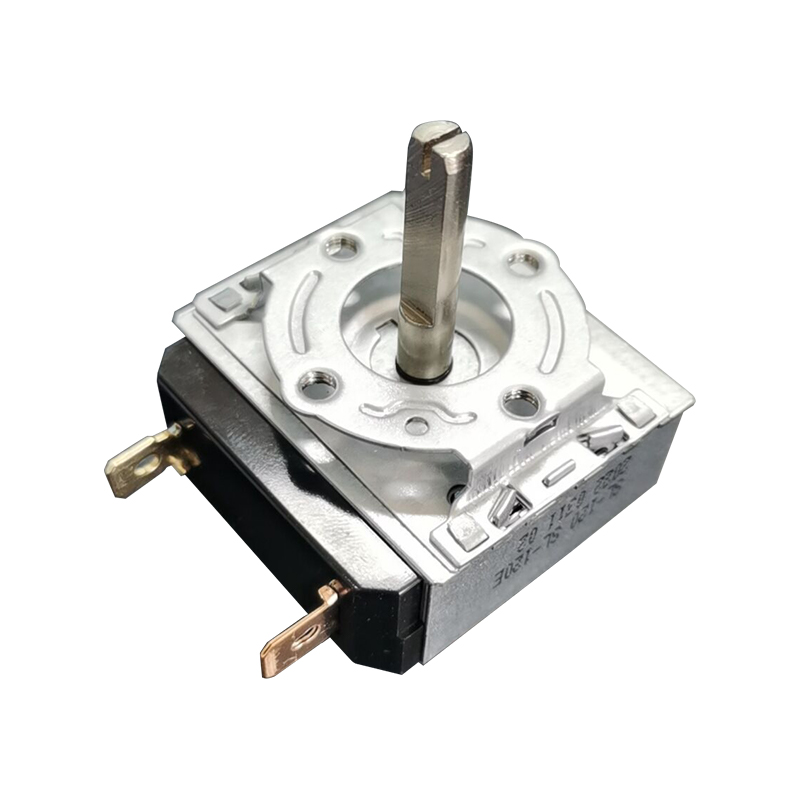
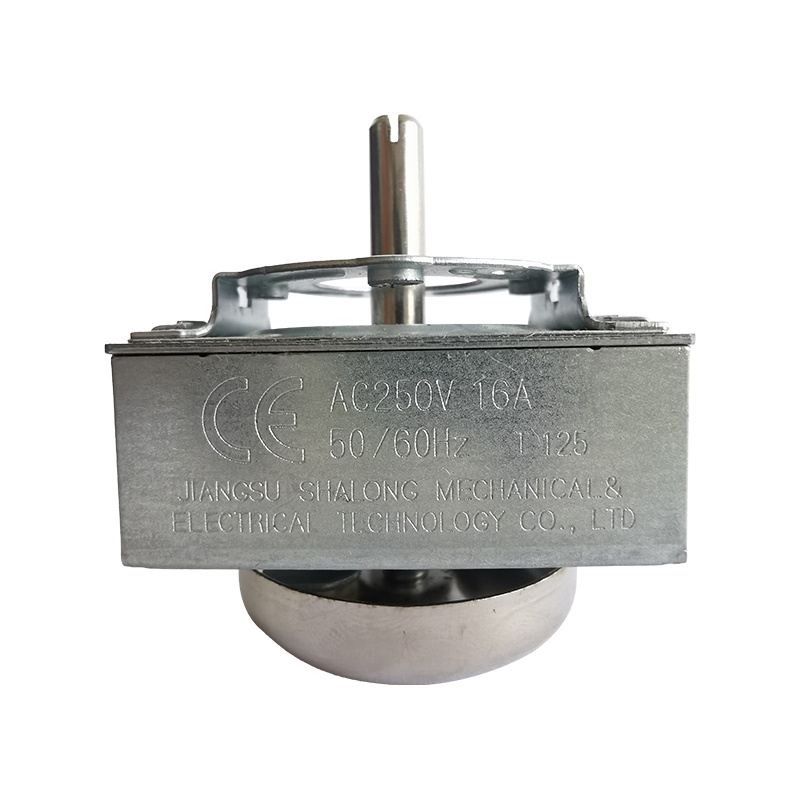
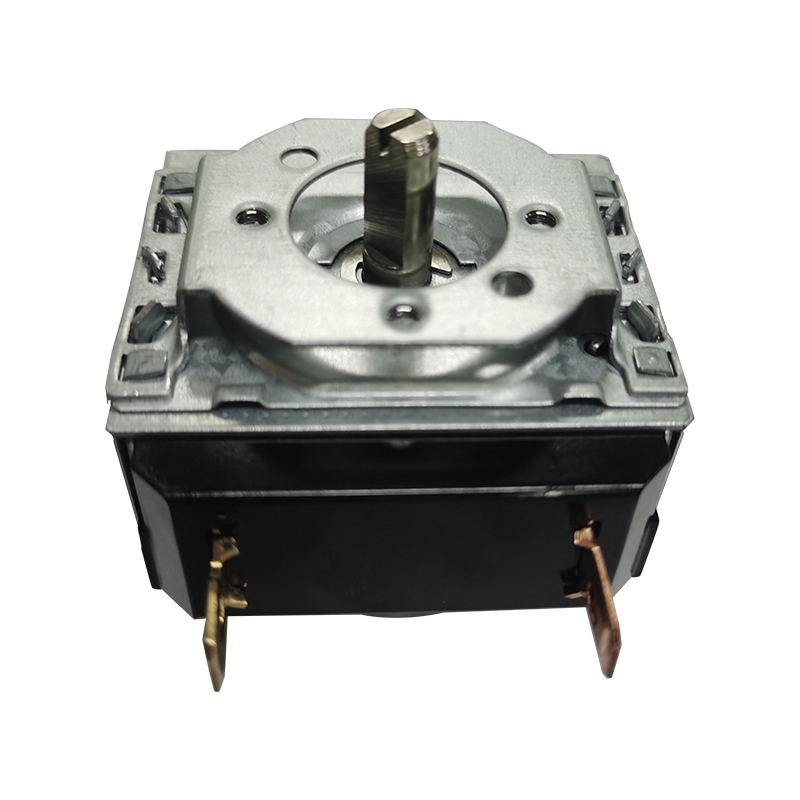
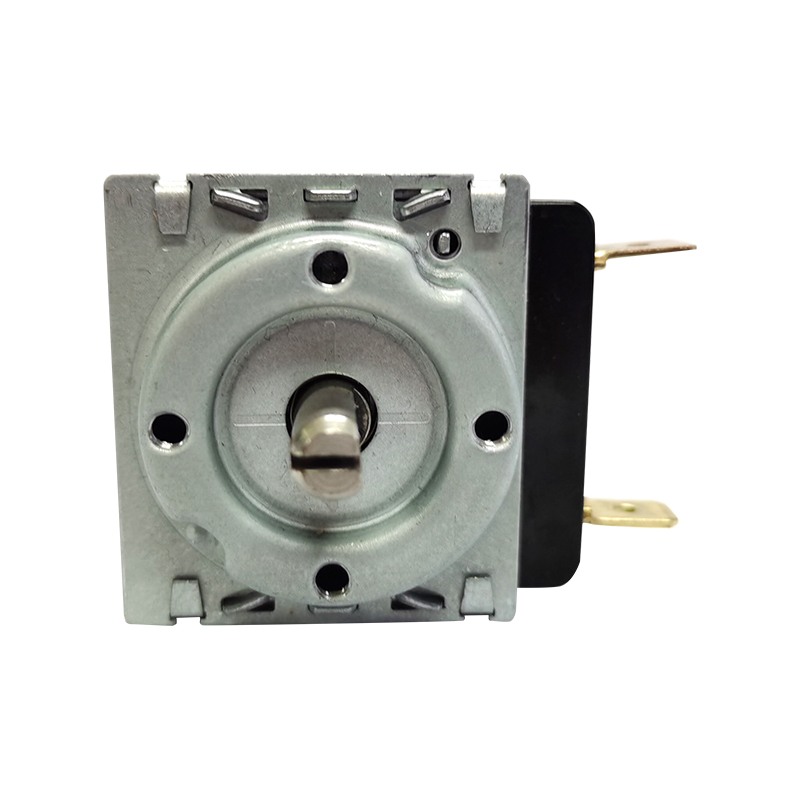
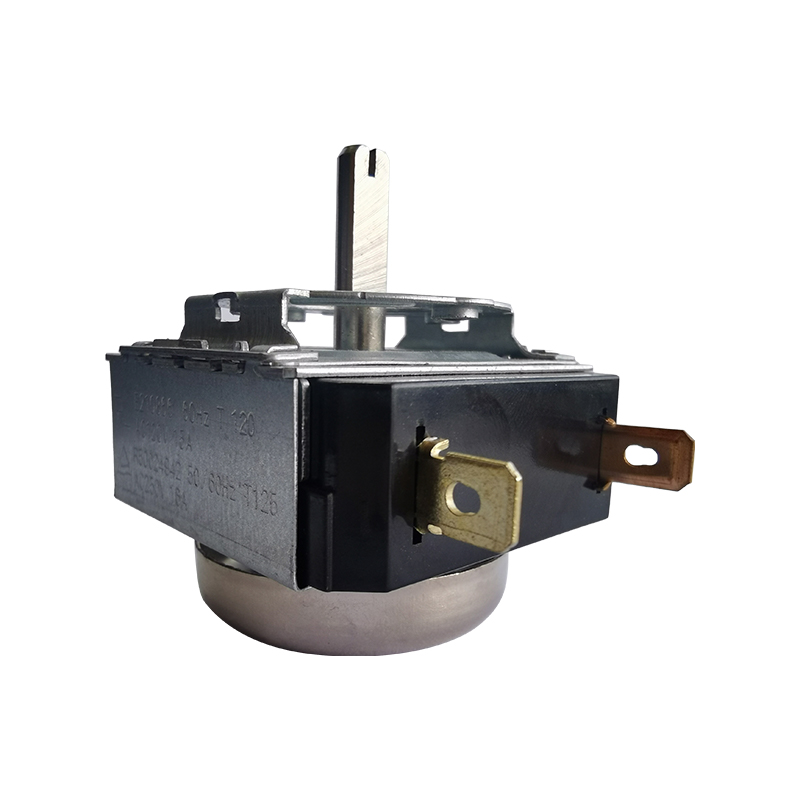
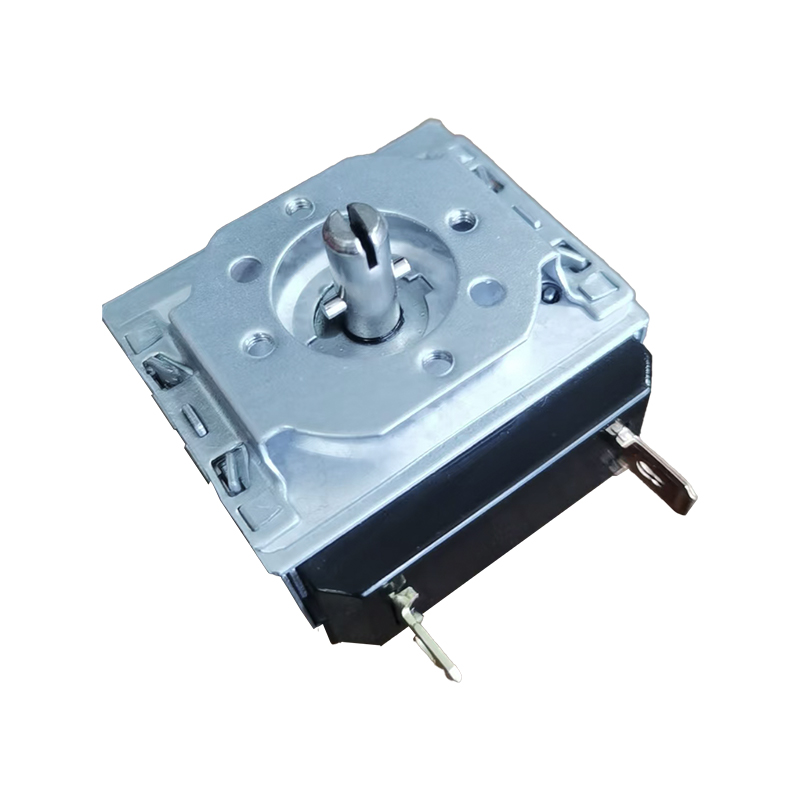
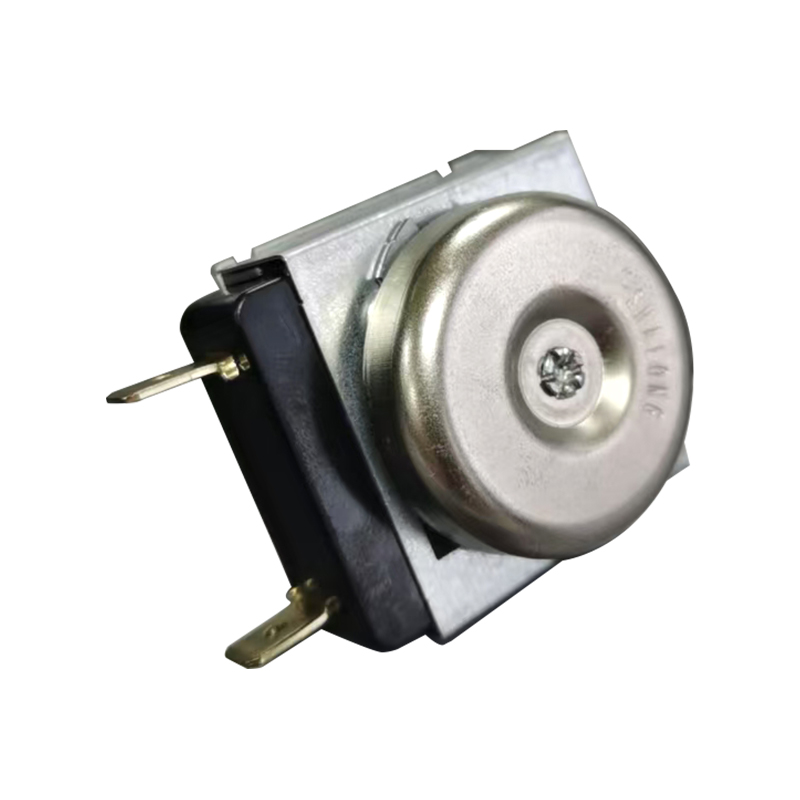
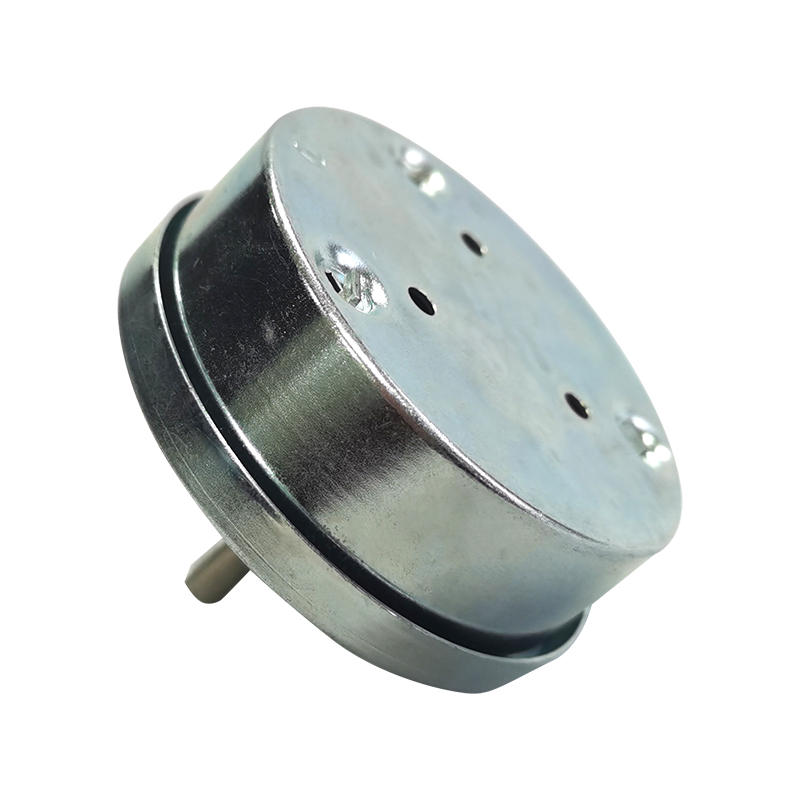
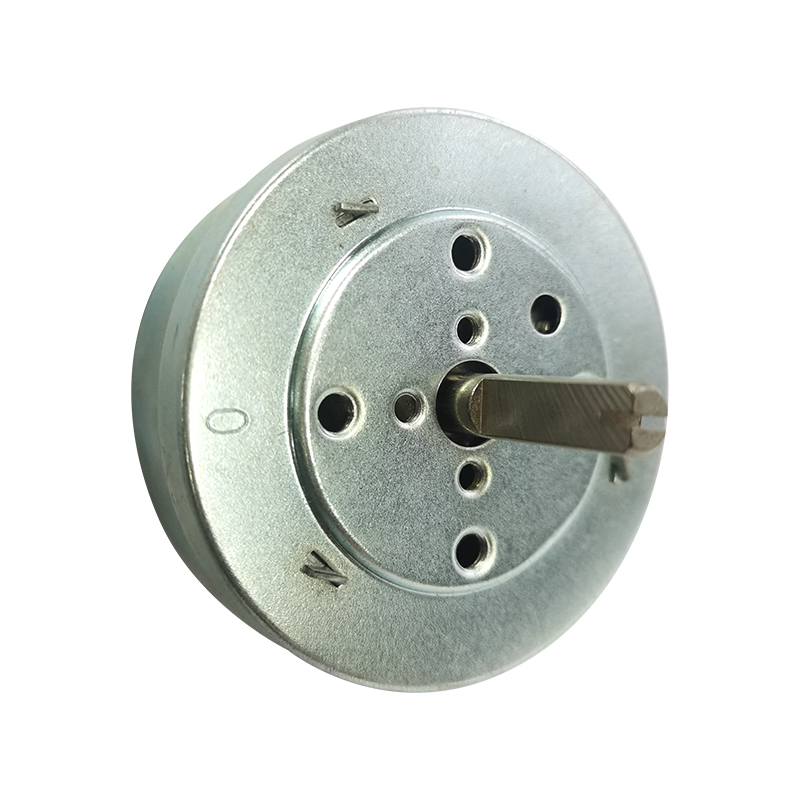
Mechanical egg timers are small clockworks. When you turn the control knob, you wind a mainspring inside the housing. That mainspring stores mechanical energy and wants to unwind. The unwinding motion is transferred to a train of gears connected to the timer shaft. A toothed escape wheel and a regulating lever, called an escapement, allow the gear train to turn in small, controlled steps instead of spinning freely. The result is a steady countdown that is visible on the dial. At the end of the countdown, a cam on the final gear opens or closes a switch. In a timer with a bell, the same movement drives a hammer that strikes the bell. In an electric appliance, the switch can interrupt the power circuit and stop the heating element.
The length of time is set by the design of the gear train. A 15-minute timer uses a different gear ratio from a 90-minute timer. The base mechanism is the same, but the combination of gears changes how far the mainspring can advance the output shaft. This is why a timer manufacturer can offer the same metal movement in ranges such as 15, 30, 60, 90, and 120 minutes.
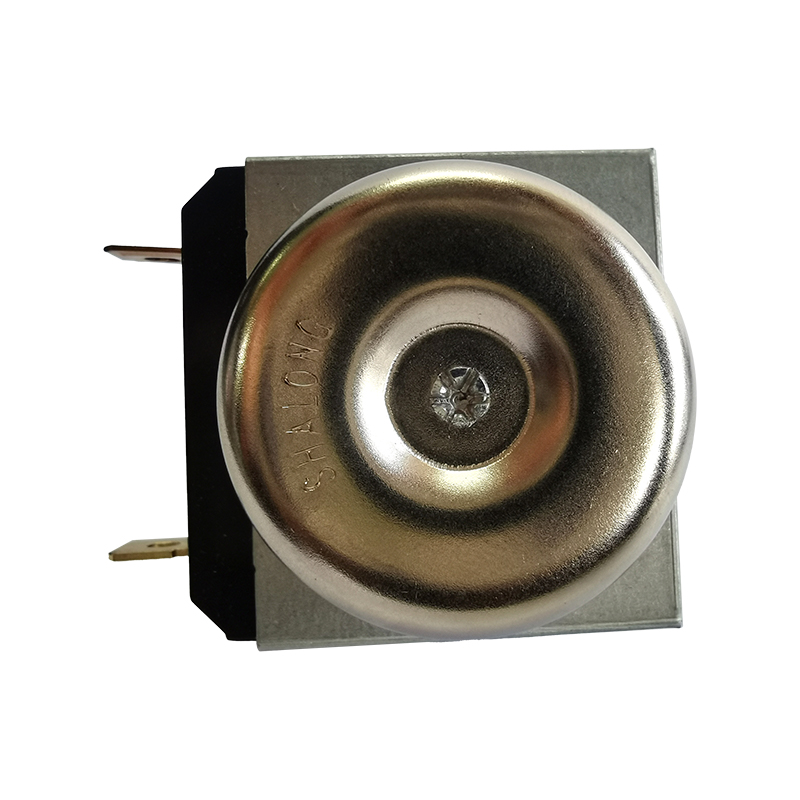
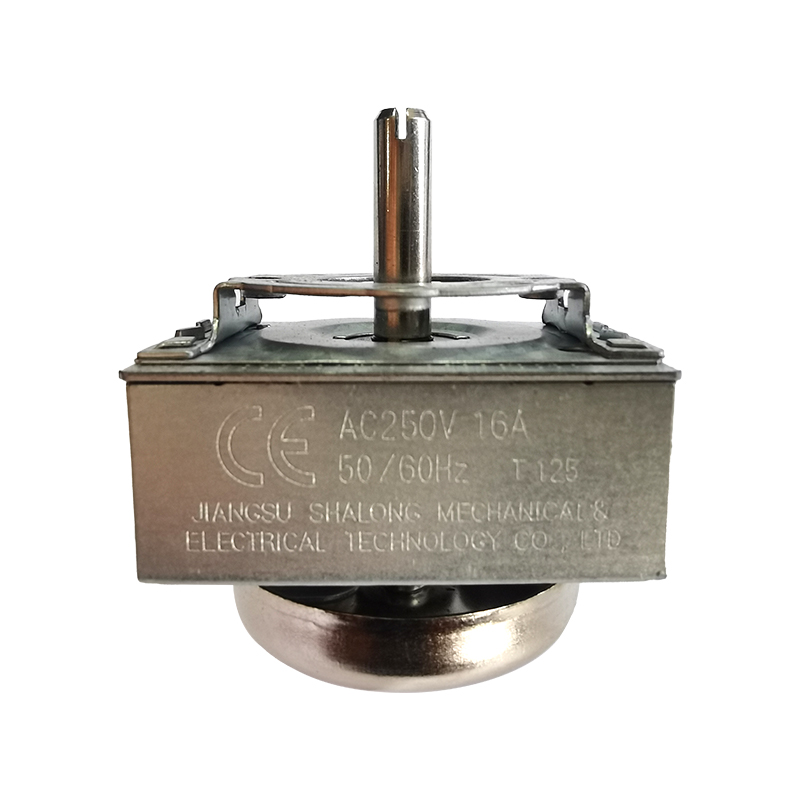
In an appliance, the mechanical timer must also survive the surrounding temperature. A stovetop egg timer stays outside the pot, but an oven timer is mounted near the heat source. That is why high-temperature-resistant metal mechanical timers are made with metal gear plates and heat-stable materials. A typical example in production is a 60-minute round oven mechanical timer for free-standing ovens, which keeps the same basic mechanism in a package designed for appliance integration.
 Wholesale 60min round oven mechanical timer for free standing ovens ManufacturerJiangsu Shalong is China OEM/ODM 60min round oven mechanical timer for free standing ovens manufacturers and 60min round oven mechanical ...View Product →
Key takeaway: A mechanical egg timer is a clockwork movement in which a spring, a gear train, and an escapement convert stored energy into a predictable countdown.
How Do Egg Timers Work With Color-Changing Indicators?
A color-changing egg timer works by temperature, not by time. The gadget contains a heat-sensitive material that changes color at a specific temperature. Different sections of the indicator may be calibrated for soft, medium, and hard eggs. When the timer is dropped into room-temperature water with the eggs, it heats up at roughly the same rate as the eggs. At certain temperatures, the color shifts, and the cook can see whether the eggs are ready without breaking the shell.
The material behind this effect is usually a thermochromic pigment or wax. The chemistry is simple enough to be made in plastic form, but it is not a control system. It cannot turn off a heating element, and it does not count down. At high altitudes, water boils below 100 degrees Celsius, so the indicator may behave differently. This is fine for a pot of eggs, but it is not suitable for controlling an oven.
Key takeaway: Color-changing egg timers measure temperature, not elapsed time, which makes them useful for stovetop eggs but unsuitable for appliance control.
Common Types of Egg Timers and Their Working Principles
There are four common ways to time an egg, and each has a distinct mechanism.
Comparison of egg timer types and their working principles
| Type |
Working principle |
Typical use |
Main limitation |
| Hourglass |
Sand falls through a narrow opening at a fixed rate |
Stovetop egg cooking |
Must be watched and turned over |
| Mechanical countdown timer |
Mainspring and gear train move the dial back to zero |
Ovens, air fryers, egg cookers, deep fryers |
Requires manual winding; interval is fixed by gear ratio |
| Color-changing egg timer |
Thermochromic pigment changes at egg-cooking temperatures |
Boiling eggs in a pot |
No audible signal; no temperature control |
| Electronic timer |
Oscillator or clock chip counts a preset time |
Digital appliances and control panels |
Uses standby power and more assembly complexity |
For appliance manufacturers and component buyers, the mechanical timer remains an established choice because it is self-powered and stable in heat. Color-changing timers are nearly always consumer gadgets, while electronic timers require a printed circuit board, software, and a power supply. The mechanical format gives a simple user interface and a clear audible or electrical signal.
Key takeaway: The four main types are hourglass, mechanical, color-changing, and electronic. Only the mechanical version functions as a self-contained switch in high-temperature appliances.
Typical Timing Ranges in Timer-Based Appliances
In mechanical timer production, timing range is usually the first specification an appliance engineer asks for. The range is not an arbitrary number: each gear ratio creates a different maximum countdown. A short range allows a more compact mechanism and finer scale markings. A long range needs more mainspring capacity and more reduction stages. The chart below groups typical maximum timing values for common kitchen and small-appliance applications.
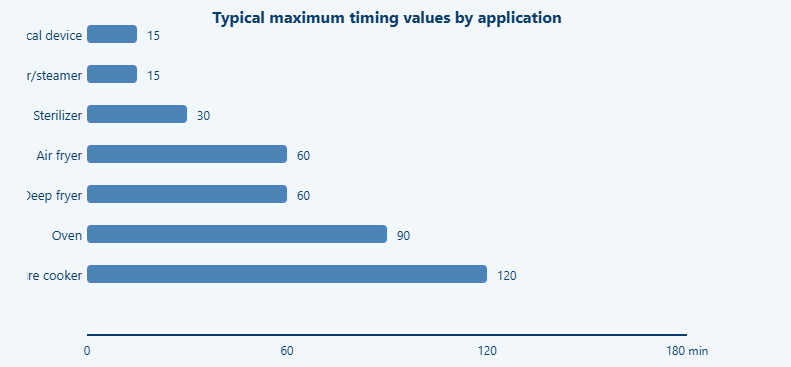
Several practical patterns emerge from these figures. Most everyday cooking tasks fit within a 60-minute window. Short-range timers are common on medical devices, sterilizers, and egg cookers. Air fryers and deep fryers usually settle on a 30-60 minute scale. Ovens and electric pressure cookers need longer running lengths, often 90-120 minutes. This is why a timer manufacturer must offer multiple gear-train variations from the same basic movement. A 15-minute timer can be built with fewer gear stages and a smaller mainspring. A 120-minute timer requires more gear reduction but works on the same spring-driven principle. Scaling is not the only variable: the designer must also check knob rotation angle and scale readability. For B2B buyers, the chart is a quick way to align the product list with the intended appliance. A supplier that already produces tools for these common ranges can shorten sample development time. The most useful advice is to define the maximum timing capacity first, then let the supplier adjust the internal gear ratio. Long-range timers are not automatically better than short-range ones; they simply match different cooking processes.
Key takeaway: Timing range is a design decision. Matching the standard mechanical range to the end application reduces tooling risk and shortens product development.
How to Choose a Mechanical Timer for Your Appliance
When the goal is a component for an egg cooker, an air fryer, or an oven, selection should start with requirements, not with an existing knob design.
Typical configurations to compare
15-minute
Egg cookers and sterilizers 30-60 minute
Air fryers and deep fryers 60-90 minute
Ovens and roasters 100-120 minute
Electric pressure cookers
Selection criteria
Selection criteria for mechanical timer components
| Appliance |
Typical range |
Signal type |
Temperature requirement |
Certification examples |
| Egg cooker |
15 minutes |
Silent |
Moderate |
CE, UL variants |
| Air fryer |
30-60 minutes |
Bell or silent |
High heat |
UL, CE, DKJ |
| Oven |
60-90 minutes |
Bell or silent |
High heat |
CE, TUV, DKJ |
| Deep fryer |
60 minutes |
Bell |
High heat |
UL, CE |
| Electric pressure cooker |
100-120 minutes |
Bell |
Moderate |
DKJ, SL |
For an air fryer production line, many OEMs start with a 30-60 minute timer because that range covers a typical cooking cycle. A common specification is a 30-60 minute air fryer mechanical timer with bell and UL/DKJ certification. Wholesalers and appliance manufacturers should also check the switch action, shaft length, mounting holes, and the torque needed to operate the knob.
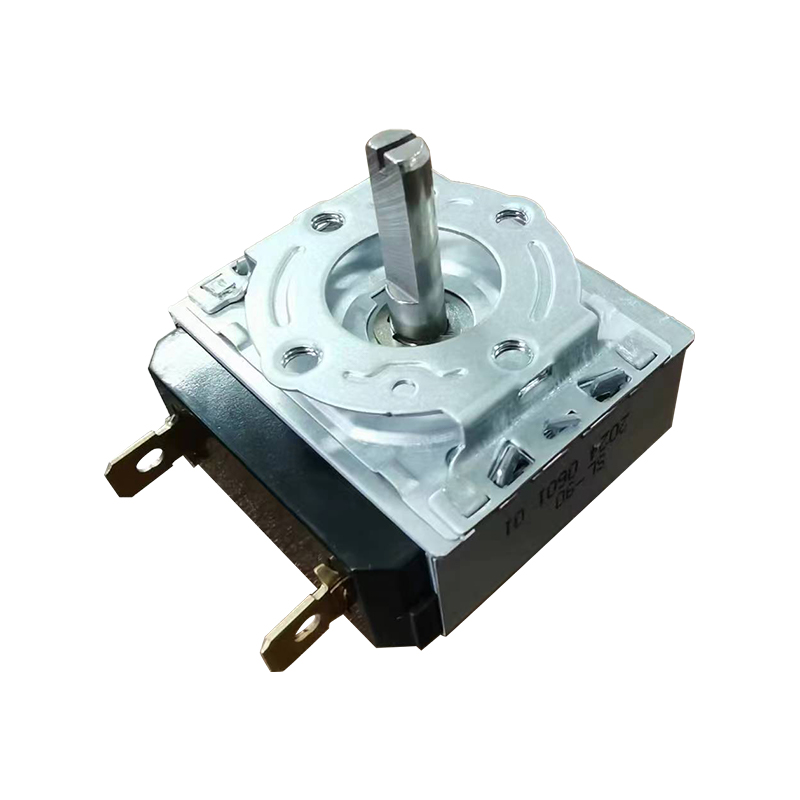 Air Fryer Mechanical Timer SL 30-60 min With Bell UL DKJ ManufacturersJiangsu Shalong is China OEM/ODM air fryer mechanical timer SL 30-60 min with bell ul dkj manufacturers and air fryer mechanical timer wi...View Product →
Selection workflow
- Start with the maximum timing range. Do not choose 120 minutes if the appliance only needs 30 minutes; a shorter range often simplifies the scale and reduces cost.
- Decide whether the end user needs an audible bell, a silent countdown, or an electrical switch that stops the appliance.
- Check the maximum environmental temperature. For ovens and air fryers, choose a metal high-temperature-resistant timer.
- Confirm certification requirements for the target market, such as UL, CE, TUV, or DKJ.
- Request samples and measure mounting dimensions, shaft length, and knob rotation angle.
- Review life cycle, quality control, and delivery capacity before approving the supplier.
Key takeaway: A reliable mechanical timer selection combines range, signal type, thermal resistance, certification, and mechanical integration.
Mechanical Timer vs. Color-Changing Egg Timer
People often compare the two because they share the same name, but they solve different problems.
Side-by-side overview of two very different egg timer mechanisms
Mechanical countdown timer
A self-contained clockwork that counts a preset interval. It can ring a bell or switch a circuit, and it works reliably in heat when made from metal.
|
Color-changing egg timer
A heat-sensitive indicator that changes color in water. It is useful for manual egg boiling but has no switch and gives no audible alarm.
|
Detailed comparison of operating behavior
| Criterion |
Mechanical countdown timer |
Color-changing indicator |
| Working principle |
Spring, gear train, escapement |
Thermochromic pigment |
| Power source |
Manual winding |
Heat from the water |
| Audible signal |
Bell or electrical signal |
None |
| Function in appliance |
Can switch off a heating element |
Cannot switch any circuit |
| High-temperature capability |
Metal movement designs can survive oven heat |
Limited to boiling water temperature |
| Best fit |
Ovens, air fryers, egg cookers, deep fryers |
Home boiling of eggs in a pot |
Key takeaway: For appliance integration, the mechanical timer is the clear choice because it combines countdown, switch action, and heat tolerance in a single component.
Maintenance and Troubleshooting for Mechanical Timers
Mechanical timers are long-lived, but they still need correct handling on a production line and in the field.
- Always turn the knob back to zero before setting a new time. This protects the internal stop mechanism.
- Wind the timer only to the marked position. Forcing the knob beyond the stop can bend the cam or strip gear teeth.
- Keep the mounting area clean. Dust and grease on the shaft can enter the movement and slow the escapement.
- Do not immerse the timer in water. Wipe the exterior with a dry or slightly damp cloth.
- Check the bell action or switch action during incoming inspection. A weak bell often means the hammer spring needs adjustment.
If the timer stops during an oven cycle, check the knob, the mounting, and the power circuit before assuming the movement has failed. A detailed step-by-step guide is available in this troubleshooting guide for a mechanical oven timer.
Key takeaway: Most mechanical timer failures come from forced winding, dirt, loose mounting, or electrical connection issues, not from the basic gear movement.
Frequently Asked Questions About Egg Timers
Are mechanical egg timers accurate?
Accuracy depends on the quality of the gear train, mainspring, and escapement. A well-made mechanical timer holds a consistent countdown because the escapement controls the release of energy. For appliance use, the timer is normally tested at the factory, and the tolerance is checked against the required cooking cycle.
|
Can a mechanical egg timer be used in an oven?
Only a high-temperature-resistant metal mechanical timer should be mounted inside or on a hot oven surface. A plastic household timer or a color-changing indicator is not designed for oven heat. The metal gear train is the part that allows the timer to keep operating in high-temperature kitchen environments.
|
Which timer is normally built into an egg cooker?
An egg cooker usually has an integrated countdown timer rather than a free-standing indicator. Because the cooker heats a small amount of water quickly, a 15-minute mechanical range is common. Many appliance manufacturers choose a compact 15-minute egg cooker metal mechanical timer without bell for this purpose.
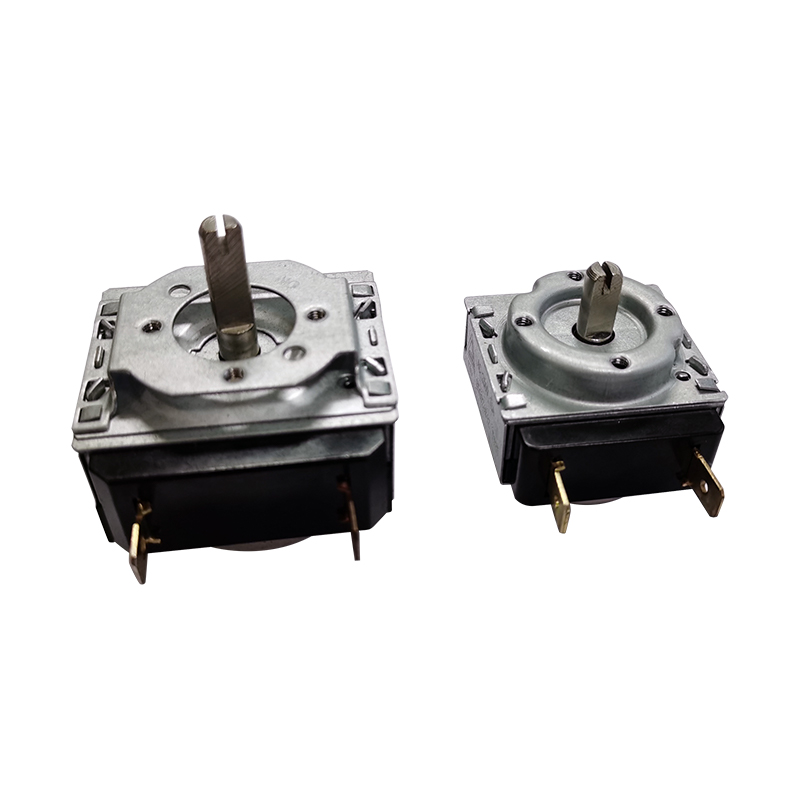 Wholesale Egg cooker metal mechanical timer SLS 15min without bell ManufacturersJiangsu Shalong is China OEM/ODM Egg cooker metal mechanical timer SLS 15min without bell manufacturers and Egg cooker metal mechanical t...View Product → Wholesale Egg cooker metal mechanical timer SLS 15min without bell ManufacturersJiangsu Shalong is China OEM/ODM Egg cooker metal mechanical timer SLS 15min without bell manufacturers and Egg cooker metal mechanical t...View Product → |
Why do some timers ring and others do not?
A timer with a bell drives a small hammer that strikes the bell when the countdown reaches zero. A timer without a bell usually closes a switch instead. In many appliances, the same signal is used to stop heating, while in consumer egg timers the bell is simply an audible reminder.
|
What is the difference between high-temperature-resistant and standard timers?
Standard timers use materials that may soften, discolor, or lose dimensional stability when exposed to oven heat. High-temperature-resistant metal mechanical timers use heat-stable metal parts and more robust bearings. This makes them suitable for ovens, air fryers, and deep fryers where the timer is close to the heat source.
|
Key takeaway: The right egg timer depends on the working environment: heat-sensitive indicators suit a pot of water, while mechanical timers suit appliance integration and high-temperature use.
More Resources on Mechanical Timer Technology
For component buyers who want to move beyond basic operation, the following resources are useful starting points.
Jiangsu Shalong Mechanical & Electrical Technology Co., Ltd. has produced mechanical timers since 1991 and supplies metal mechanical timer components to kitchen appliance manufacturers and wholesalers. If you are evaluating a timer for a new appliance, start with the available standard ranges and then confirm the thermal, certification, and installation details with the supplier.
Key takeaway: The best way to apply this information is to match the operating principle to the appliance, then verify range, heat resistance, signal, and certifications.



 English
 中文简体
中文简体